
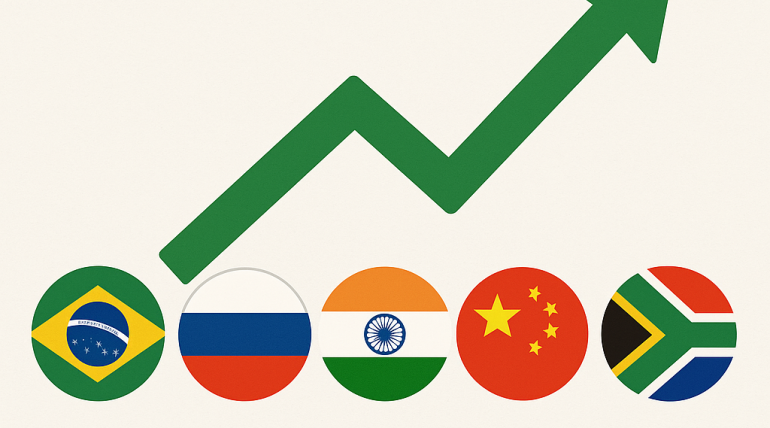
Russia exports to BRICS 2025

Russia exports to BRICS 2025: Key Trends, Drivers & Outlook

Russia’s Export Surge to BRICS in 2025: Key Trends, Drivers and Outlook

Russia’s export profile in 2025 continues to pivot decisively toward the BRICS economic bloc — Brazil, Russia, India, China and South Africa — along with the newer members Egypt, Ethiopia, Iran and the United Arab Emirates. As Western markets remain restricted by sanctions and compliance barriers, BRICS partners have become Russia’s principal growth outlet. The following analysis examines current export data, sector-specific developments, and near-term forecasts shaping this redirection of trade.

1. Re-Weighting of Trade Flows

According to customs data compiled by Russia’s Federal Statistics Service and partner agencies, total trade turnover between Russia and the BRICS + group rose an estimated 6 – 7 percent year-on-year in 2024 — providing the foundation for continued expansion in 2025. BRICS + now accounts for roughly 27 percent of global merchandise exports, compared with about 24 percent five years ago. Within Russia’s external trade, the bloc represents more than one-third of total exports, up from 19 percent in 2018.

The strategic pivot has been reinforced by currency realignment. Bilateral settlements in national currencies — mainly yuan, rupee and dirham — have replaced dollar-denominated transactions in many long-term contracts, reducing exposure to Western payment systems. Analysts expect this structural change to endure regardless of political developments.

2. Energy: The Core of Russian Exports

Energy commodities continue to dominate Russia’s export basket. Despite volatility in pricing, fossil-fuel revenues remain the main source of foreign currency inflows. The independent Centre for Research on Energy and Clean Air (CREA) estimated that Russian fossil-fuel export revenues averaged €546 million per day in September 2025 — down 4 percent month-on-month but still substantial. [1]

India remains Russia’s largest single buyer of seaborne crude oil, sourcing approximately 34 percent of its total imports from Russian suppliers as of September 2025. [2] Although total Indian crude imports declined 10 percent from 2024 levels, Russia retained its leading share through competitive discounts and flexible delivery terms. China remains another anchor market, absorbing roughly 40 percent of Russian fossil-fuel revenue streams. Energy logistics through the Eastern Siberia–Pacific Ocean pipeline and Arctic shipping corridors continue to expand capacity.

3. Agricultural Exports: From Food Security to Market Strategy

The diversification of Russian exports into agriculture has accelerated sharply. The 2025/26 season is expected to set records for both grain and vegetable-oil shipments. The Agriculture Ministry projects total wheat exports at 43 – 44 million metric tons, solidifying Russia’s position as the world’s leading wheat supplier. [3]

Sunflower-oil exports are forecast near 5 million tons, with India accounting for nearly one-third of purchases. Egypt and Iran are also expanding contracts under bilateral food-security programs. Fisheries and aquaculture are joining the mix: Russian seafood exports to BRICS partners rose 50 percent from 2021 to 2024, valued at roughly US $3.1 billion, according to Tridge Market data.

These flows align with a broader Russian objective — to balance hydrocarbon dependence with high-margin agri-exports backed by ruble- or yuan-denominated financing.

4. Fertilizers and Minerals

Fertilizer exports illustrate Russia’s growing interdependence with emerging markets. The Russian Fertilizer Producers Association aims to raise global market share to 25 percent by 2030, up from about 20 percent today. [4] Nearly half of global fertilizer consumption occurs within BRICS economies — chiefly India and China — making the bloc a natural destination. In 2025, Russian exports of nitrogen and potash fertilizers to India reached record volumes despite logistical and payment challenges.

Metals and mining products follow a similar pattern. Nickel, aluminum, and copper shipments to China and India have partially offset declines in European demand. Russia’s Ural and Siberian mining regions are now oriented toward Asian processing facilities and port expansion projects on the Pacific coast.

5. Bilateral Dynamics Across the Bloc

Brazil and Latin America

Trade between Russia and Brazil reached an estimated US $12.4 billion in 2024 — with Russian exports around US $11 billion — driven by fertilizers, grains and chemical products. [5] The partnership is underpinned by Brazil’s agricultural demand for potash and phosphate inputs. Logistics through Atlantic routes and the Northern Sea corridor may reduce transit time in the future.

India and South Asia

India’s trade volume with Russia expanded more than fivefold between 2021 and 2024. Beyond crude oil, bilateral initiatives include shipbuilding, nuclear fuel supply, and pharmaceutical imports from India into Russia. Analysts expect bilateral settlements in rupees and rubles to stabilize by mid-2026, after initial currency liquidity constraints are resolved.

China

China remains Russia’s largest overall trading partner. However, customs statistics for January – September 2025 show a decline of about 9 percent in total turnover to US $163 billion, reflecting weaker Chinese industrial demand and commodity price adjustments. Despite this, the two countries maintain strategic coordination in energy and infrastructure development, including the Power of Siberia pipeline and joint projects in the Arctic.

New Entrants to BRICS +

Egypt and the UAE are emerging as hubs for Russian grain and energy re-exports. The UAE’s Jebel Ali port has become a transshipment center for Russian commodities destined for Asia and Africa, while Egypt is negotiating expanded wheat and oil supply agreements linked to its domestic food security agenda. Iran and Ethiopia are expected to focus on industrial inputs and energy equipment in bilateral trade plans.

6. Logistics and Financial Corridors

The development of new transport and finance corridors is central to sustaining export growth. The International North–South Transport Corridor (INSTC), connecting Russia to India via Iran and the Caspian Sea, has cut transit time by 30 – 40 percent compared with Suez routes. Meanwhile, Russia and China are testing the digital ruble and cross-border settlement systems based on CIPS to streamline payments. These technical linkages enhance resilience against financial sanctions and support faster customs clearance across BRICS ports.

7. Economic Risks and Moderating Forces

Despite the strong headline numbers, several risks could temper Russia’s export momentum:

  • Price volatility and tax exposure: Declining global oil prices and adjusted export duties affect budget revenues.
  • Shipping capacity constraints: Weather and security incidents at Black Sea ports (e.g., Novorossiysk) continue to disrupt flows. [6]
  • Currency liquidity issues: Limited convertibility between rubles and partner currencies still poses short-term barriers.
  • Infrastructure lag: While new corridors exist, port modernization and rail capacity expansion remain unfinished.

Nevertheless, the overall trajectory of Russian trade with BRICS countries remains positive. Structural shifts in supply chains and investment flows are unlikely to reverse, even under conservative growth assumptions.

8. Outlook for 2026 and Beyond

Analysts expect Russia’s exports to BRICS markets to grow by approximately 4 to 6 percent annually over the next two years. The energy segment will remain dominant but with gradual contraction in share as agriculture and chemicals gain ground. By 2026, BRICS importers could account for half of Russia’s non-energy export revenues, compared with around one-third today.

On the macroeconomic front, the ruble’s exchange stability against Asian currencies, together with regional integration projects, will define how sustainable the pivot becomes. In parallel, BRICS cooperation on standards and customs digitization may further simplify trade flows and reduce transaction costs.

Conclusion

Russia’s export realignment toward the BRICS bloc is no longer an emergency response to sanctions but an enduring structural transition. Energy remains the financial engine, while grains, fertilizers, and metals constitute the broadening base of trade. Logistics innovation and financial sovereignty within BRICS are set to define the next phase of growth. For global importers and analysts alike, 2025 marks a turning point in how Russia integrates into the emerging economic order of the Global South.
Sources: CREA Monthly Analysis (Sept 2025); Times of India Oil Trade Data (2025); Reuters Agricultural and Fertilizer Reports (2025); TV BRICS Trade Figures (2024); Energy and Clean Air Database; official customs data via BRICS Joint Statistical Publication 2025.

[6]
Read More
Russian sunflower seeds export to BRICS”, “Sunflower oil import from Russia”, “BRICS trade in agricultural products Russian Suflowers

Import from Russia to BRICS Countries – Premium Sunflower Seeds and Sunflower Oil Exports

Russia’s Agricultural Power Meets BRICS Cooperation

Russia is emerging as a global leader in agricultural exports, particularly in sunflower seeds and sunflower oil. With growing economic collaboration among BRICS countries — Brazil, Russia, India, China, South Africa, Egypt, Ethiopia, Iran, Indonesia, and the United Arab Emirates — the import from Russia to BRICS countries has become smoother, faster, and more beneficial for international buyers.

The nation’s vast fertile lands, modern farming technologies, and strict quality standards make Russian agricultural products highly competitive in the global market. Every shipment of sunflower products reflects the strength, purity, and trust that define Russian farming traditions.

Why Choose Russia for Sunflower Seeds and Oil Imports?

Importing agricultural goods from Russia means gaining access to world-class quality and reliability. Russian exporters combine advanced technologies with natural advantages to deliver outstanding products supported by:

  • 🌿 High agricultural quality standards
  • 🏭 Modern oil extraction and packaging facilities
  • 🚛 Efficient logistics and export operations
  • 📜 Full certification and documentation
  • 🤝 Stable BRICS trade partnerships

Sunflower Seeds: The Golden Core of Russian Agriculture

Russian sunflower seeds are known for their natural purity, high oil content, and balanced nutrition. Grown in nutrient-rich chernozem soil, these seeds maintain excellent taste and texture, ideal for both human and industrial consumption.

Available varieties include raw, roasted, hulled, and dehulled sunflower seeds — all cleaned, sorted, and packed in eco-friendly materials for global export. These seeds are suitable for:

  • Snack and food processing industries
  • Oil extraction and pressing
  • Animal feed and organic farming
  • Wholesale and retail distribution

Sunflower Oil: A Symbol of Health and Purity

Russia’s sunflower oil exports continue to grow year after year, representing the country’s commitment to natural, healthy, and sustainable food production. Extracted through cold-press or refined processes, the oil is rich in vitamins A, D, and E, with a mild taste and golden clarity.

It is widely used in:

  • Cooking and food manufacturing
  • Cosmetic and pharmaceutical industries
  • Retail and wholesale distribution

All production follows ISO, HACCP, and GOST international quality standards, ensuring each batch meets global requirements.

Professional Packaging and Export Standards

When you import sunflower seeds and oil from Russia to BRICS countries, you receive professionally packed products ready for direct use or sale. Packaging options include:

  • Bulk bags (20–50 kg)
  • Consumer bottles (1–5 liters)
  • Industrial containers and drums

Labels can be customized with private brands or neutral packaging as per client requests. Every shipment includes complete export documents for smooth customs clearance across BRICS destinations.

Healthy, Sustainable, and Eco-Friendly Production

Russia’s sunflower sector is built on eco-conscious farming and non-GMO cultivation. Farmers use natural fertilizers, renewable energy systems, and advanced storage technology to ensure freshness and sustainability. This commitment aligns with the BRICS vision of environmentally responsible trade and food security.

Logistics and Trade Support Across BRICS

Thanks to Russia’s modern infrastructure, strategic geography, and long-standing trade agreements, imports from Russia to BRICS countries are fast, efficient, and highly reliable. The logistics network is designed to ensure smooth delivery of sunflower seeds, sunflower oil, and other agricultural products to every member of the expanded BRICS group — Brazil, Russia, India, China, South Africa, Egypt, Ethiopia, Iran, Indonesia, and the United Arab Emirates.


Russia’s well-developed transportation system connects easily with all regions of the BRICS
alliance through multiple international corridors:

  • 🚢 Sea freight routes via the Black Sea, Baltic Sea, and Arctic ports — ensuring fast maritime connections to Egypt, India, the UAE, Indonesia, and Africa’s coastal regions.
  • 🚂 Railway networks linking Russia directly to China, Iran, India, and Central Asia — offering reliable, cost-effective delivery for bulk agricultural exports.
  • 🚛 Land and road routes providing seamless overland access to Iran, the Middle East, and Eastern Africa (Ethiopia and Egypt).
  • ✈️ Air freight options available for urgent shipments or premium orders to destinations such as Brazil, the UAE, and Indonesia.

This integrated logistics ecosystem makes Russian exports to BRICS countries simple and accessible — supported by coordinated customs procedures, multilingual documentation, and strong diplomatic cooperation among all member nations. Importers benefit from shorter transit times, optimized costs, and guaranteed product freshness, making Russia a dependable partner for sustainable agricultural trade across the entire BRICS network.

Certifications and Quality Control

All exports undergo multi-level inspection and certification. Russian exporters provide:

  • Certificate of Origin
  • Phytosanitary Certificate
  • Quality and Laboratory Reports
  • Packing and Shipping Lists
  • Insurance and logistics coordination

This ensures compliance with international standards and guarantees product safety, freshness, and reliability.

BRICS Market Outlook for Sunflower Products

The demand for sunflower oil and seeds in BRICS countries continues to rise due to the global shift toward healthier diets and plant-based nutrition. Russia’s role as a reliable exporter places it at the center of this transformation, offering competitive prices and consistent supply capacity.

Partner with Russian Sunflower Exporters

If your company is seeking trusted suppliers, Russia provides a robust export ecosystem that supports every stage — from product selection to global shipment. Join the growing list of importers strengthening BRICS cooperation through sustainable agricultural trade.

Contact for Cooperation

We welcome importers, distributors, and wholesalers from Brazil, India, China, South Africa, Egypt, Ethiopia, Iran, Indonesia, and the United Arab Emirates to partner with certified Russian producers of sunflower seeds and sunflower oil.

📩 Email: contact@greenrusnk.com
🌐 Website: greenrusnk.com
🏭 Origin: Russian Federation – Certified Agricultural Exporter
💼 Products: Sunflower Seeds, Sunflower Oil, and Agro Commodities for BRICS Markets

Read More

Sunflower Seeds from Russia: RUSNK’s Excellence in Export

The Rise of the Sunflower Seed Sunflower seeds have become more than just a snack or an addition to dishes. Globally recognized for their health benefits, flavor, and versatility, they have carved a niche for themselves in the kitchens of gourmet chefs and households alike. But when it comes to sourcing the finest sunflower seeds, there’s a clear leader – Russia. And, within the expanse of this agrarian giant, RUSNK stands as the epitome of sunflower seed excellence.

Russia’s Agrarian Gold Russia’s vast terrains, fertile soils, and unique climate create the perfect environment for sunflower cultivation. The nation has consistently ranked as one of the world’s leading sunflower seed producers. But while production is a feat in itself, ensuring the seeds are of top-notch quality and ready for global markets requires expertise – this is where RUSNK shines.

Why RUSNK is the Preferred Choice for Sunflower Seed Imports:

  1. Unparalleled Quality Control: Every batch of sunflower seeds passing through RUSNK undergoes rigorous quality checks. From ensuring they’re free from contaminants to confirming their nutritional content, RUSNK sets the gold standard in seed quality.
  2. Deep-rooted Partnerships with Farmers: RUSNK’s network encompasses over 250,000 farmers. These partnerships, built on trust and shared values, ensure a consistent supply of premium-grade sunflower seeds.
  3. Sustainability in Practice: With the global demand for sustainable agricultural products on the rise, RUSNK leads by example. The company’s commitment to eco-friendly farming practices not only preserves Russia’s fertile lands but also ensures that the sunflower seeds you receive are produced with utmost respect for the environment.
  4. State-of-the-art Processing Facilities: The journey from the farm to the global market demands meticulous processing. RUSNK’s advanced processing facilities ensure that the seeds retain their natural flavor, texture, and nutrition.
  5. Customization for Diverse Markets: Recognizing the varied preferences and needs of international markets, RUSNK offers customized solutions. Whether it’s oil-rich seeds for extraction or flavor-packed ones for direct consumption, RUSNK has it all.
  6. Efficient and Reliable Supply Chain: In the world of exports, reliability is key. RUSNK’s robust supply chain ensures timely deliveries, irrespective of the destination.
  7. Affordability Meets Quality: Marrying quality with affordability, RUSNK ensures that premium sunflower seeds don’t carry a premium price tag. Their expansive operations, economies of scale, and direct partnerships with farmers allow for competitive pricing.

A Testament to Excellence The global testimonials and feedback about RUSNK’s sunflower seeds are a testament to their superiority. Chefs, food producers, and households alike laud the consistency, flavor, and quality that RUSNK delivers with each shipment.

The decision to import sunflower seeds, or any agricultural product for that matter, requires careful consideration of the source. With RUSNK, you’re not just sourcing from Russia, but you’re partnering with an entity that embodies the very essence of Russian agricultural excellence. When it’s about sunflower seeds, it isn’t just about choosing a supplier; it’s about choosing a legacy, a tradition, and an unwavering commitment to quality. With RUSNK, you’re choosing the best Russia has to offer.

Read More

RUSNK Company: Pioneering Global Agriculture with Russian Excellence

In the sprawling tapestry of the global agricultural landscape, certain names stand out, not just for their scale but for their commitment to quality, innovation, and tradition. One such name, etched with golden letters, is RUSNK—a beacon of Russian agrarian excellence and a global ambassador of the nation’s rich farming heritage.

Rooted in Russia’s Soil Russia, with its vast tracts of fertile land, diverse climatic zones, and an agrarian history that dates back millennia, is a natural powerhouse in the world of agriculture. Embedded in this context, RUSNK isn’t just a company—it’s an embodiment of Russian agriculture’s spirit. Born from the soil of this great nation, RUSNK has grown, not just in scale but in its depth of understanding and appreciation of what agriculture means.

A Network Beyond Compare At the heart of RUSNK’s operations is its impressive partnership network, encompassing over 250,000 dedicated farmers. This network, spread from the frosty tundras of Siberia to the sun-kissed fields of the south, ensures a consistent, top-tier quality of products. Each farmer, with tales of traditions passed down through generations, adds a unique touch to the collective RUSNK offering.

Achievements That Speak Volumes RUSNK’s journey is punctuated with numerous milestones, but one stands out prominently: the successful completion of over 760,000 agricultural projects. These aren’t mere numbers; they narrate stories of innovation, resilience, and a commitment to elevate global agricultural standards. From sustainable farming initiatives to large-scale crop optimizations, these projects have left an indelible mark on the international farming community.

Quality as a Trademark RUSNK’s reputation is built upon an unwavering commitment to quality. Whether it’s grains, wheats, lentils, or sunflower seeds, every product that bears the RUSNK stamp undergoes rigorous quality checks, ensuring they meet global standards while retaining the authentic touch of Russian farming traditions.

The Customer Echo “WHAT OUR CUSTOMERS ARE TALKING ABOUT” isn’t just a section on a webpage; it’s a testament to RUSNK’s global impact. From the bustling markets of Asia to the gourmet kitchens of Europe, testimonials pour in, lauding the unmatched quality and the essence of Russia captured in every product.

A Future Forward Vision While deeply rooted in tradition, RUSNK is not one to rest on its laurels. With a forward-looking vision, the company continuously invests in research, innovation, and sustainable farming techniques. The goal? To ensure that as the world’s agricultural needs evolve, RUSNK remains at the forefront, leading with example and excellence.


The Pillars of RUSNK’s Success

Embracing Diversity Russia’s vast geographical expanse offers a myriad of microclimates, each with its unique agricultural strengths. RUSNK harnesses this diversity to its advantage. From the barley-rich fields of the Urals to the vegetable gardens of the Volga, the company’s reach embraces the entire agrarian spectrum of Russia. This wide-ranging portfolio ensures that RUSNK doesn’t just offer a product but an array of agricultural riches that cater to global palettes and needs.

Sustainable Farming: A Commitment, Not a Choice As global conversations shift towards sustainable and environmentally-friendly practices, RUSNK stands ahead of the curve. The company’s ethos is rooted in responsible farming. This means not just maximizing output, but doing so in a way that respects the land, conserves resources, and ensures that the soil remains fertile for generations to come. By integrating modern technology with age-old practices, RUSNK has managed to strike a balance, producing bountiful harvests without straining Mother Earth.

Investing in the Future: Research & Development Behind the scenes of every bag of grain or seed that RUSNK delivers, there’s a robust R&D wing at work. Collaborating with international agricultural institutes and local research centers, RUSNK is constantly on the lookout for innovative farming techniques, crop optimization strategies, and sustainable practices. This investment in research not only ensures a superior product but paves the way for the future of farming.

Empowering the Agrarian Community For RUSNK, the relationship with farmers goes beyond mere partnerships. It’s a bond, nurtured by mutual respect and a shared vision. The company’s initiatives to uplift the farming community—be it through training programs, financial assistance, or technology transfers—ensure that while RUSNK grows, it lifts its entire community with it.

Global Reach with a Local Touch RUSNK’s operations span the globe, catering to diverse markets with varying demands. However, irrespective of where RUSNK marks its presence, the company ensures a localized touch. Understanding local preferences, adhering to regional quality standards, and building community relations form the essence of RUSNK’s global strategy.

Adapting to a Changing World In a rapidly changing global landscape—marked by climate change, shifting dietary preferences, and evolving market dynamics—RUSNK remains agile. Their adaptability, backed by research and a deep understanding of global trends, ensures they not only weather the storms but often stay ahead, setting trends rather than following them.

Read More
  • 1
  • 2