
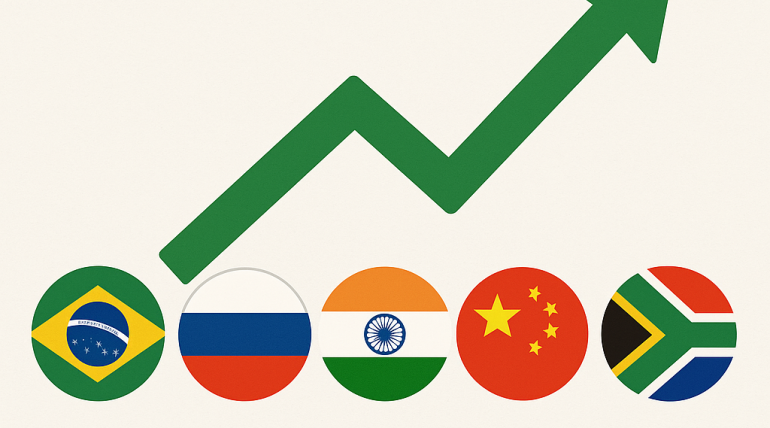
Russia exports to BRICS 2025

Exportations de la Russie vers les pays des BRICS 2025 : Tendances clés, facteurs moteurs et perspectives

Exportations de la Russie vers les pays des BRICS 2025 : Tendances clés, facteurs moteurs et perspectives

Le profil des exportations russes en 2025 continue de s’orienter résolument vers le bloc économique des BRICS — Brésil, Russie, Inde, Chine et Afrique du Sud — ainsi que vers les nouveaux membres Égypte, Éthiopie, Iran et Émirats arabes unis. Alors que les marchés occidentaux demeurent restreints par les sanctions et les contraintes de conformité, les partenaires des BRICS s’imposent désormais comme la principale voie de croissance pour la Russie. L’analyse suivante examine les données actuelles sur les exportations, les évolutions sectorielles et les prévisions à court terme qui façonnent cette réorientation commerciale.

1. Rééquilibrage des flux commerciaux

Selon les données douanières compilées par le Service fédéral des statistiques de Russie et ses agences partenaires, le volume total des échanges commerciaux entre la Russie et le groupe BRICS + a augmenté d’environ 6 à 7 % sur un an en 2024, posant ainsi les bases d’une nouvelle expansion en 2025. Le BRICS + représente désormais environ 27 % des exportations mondiales de marchandises, contre 24 % il y a cinq ans. Dans le commerce extérieur de la Russie, ce bloc constitue aujourd’hui plus d’un tiers des exportations totales, contre 19 % en 2018.

Ce pivot stratégique a été renforcé par un réajustement monétaire. Les règlements bilatéraux en monnaies nationales — principalement en yuan, roupie et dirham — ont remplacé les transactions libellées en dollars dans de nombreux contrats à long terme, réduisant ainsi la dépendance aux systèmes de paiement occidentaux. Les analystes estiment que ce changement structurel devrait perdurer, quelles que soient les évolutions politiques à venir.

2. Énergie : le cœur des exportations russes

Les produits énergétiques continuent de dominer le panier des exportations russes. Malgré la volatilité des prix, les revenus tirés des combustibles fossiles demeurent la principale source d’entrée de devises étrangères. Le Centre indépendant de recherche sur l’énergie et l’air pur (CREA) estime que les recettes russes provenant des exportations de combustibles fossiles ont atteint en moyenne 546 millions d’euros par jour en septembre 2025, soit une baisse de 4 % par rapport au mois précédent, mais un niveau toujours substantiel. [1]

L’Inde demeure le plus grand acheteur unique de pétrole brut russe transporté par voie maritime, s’approvisionnant à hauteur d’environ 34 % de ses importations totales auprès de fournisseurs russes en septembre 2025. [2] Bien que les importations totales de brut de l’Inde aient diminué de 10 % par rapport aux niveaux de 2024, la Russie a conservé sa position de leader grâce à des rabais compétitifs et à des conditions de livraison flexibles. La Chine reste un autre marché d’ancrage, absorbant environ 40 % des revenus russes issus des combustibles fossiles. Les infrastructures logistiques énergétiques — notamment l’oléoduc Sibérie orientale–océan Pacifique et les corridors maritimes arctiques — continuent d’augmenter leurs capacités.

3. Сельскохозяйственный экспорт: от продовольственной безопасности к рыночной стратегии

La diversification des exportations russes vers le secteur agricole s’est fortement accélérée. La campagne 2025/26 devrait établir de nouveaux records en matière d’expéditions de céréales et d’huiles végétales. Le ministère russe de l’Agriculture prévoit des exportations totales de blé comprises entre 43 et 44 millions de tonnes métriques, consolidant ainsi la position de la Russie en tant que premier fournisseur mondial de blé. [3]

Les exportations d’huile de tournesol sont estimées à près de 5 millions de tonnes, l’Inde représentant à elle seule environ un tiers des achats. L’Égypte et l’Iran étendent également leurs contrats dans le cadre de programmes bilatéraux de sécurité alimentaire. Le secteur des pêches et de l’aquaculture rejoint également cette dynamique : les exportations russes de produits de la mer vers les partenaires des BRICS ont augmenté de 50 % entre 2021 et 2024, atteignant une valeur d’environ 3,1 milliards de dollars US, selon les données de Tridge Market.

Ces flux s’inscrivent dans un objectif russe plus large : rééquilibrer la dépendance aux hydrocarbures en développant des exportations agricoles à forte valeur ajoutée, soutenues par un financement libellé en roubles ou en yuans.

4. Engrais et minéraux

Les exportations d’engrais illustrent l’interdépendance croissante de la Russie avec les marchés émergents. L’Association des producteurs d’engrais de Russie vise à porter la part de marché mondiale à 25 % d’ici 2030, contre environ 20 % actuellement. [4] Près de la moitié de la consommation mondiale d’engrais se concentre au sein des économies des BRICS — principalement l’Inde et la Chine — faisant du bloc une destination naturelle pour la Russie. En 2025, les exportations russes d’engrais azotés et potassiques vers l’Inde ont atteint des volumes records, malgré les défis logistiques et les contraintes de paiement.

Les produits métalliques et miniers suivent une tendance similaire. Les expéditions de nickel, d’aluminium et de cuivre vers la Chine et l’Inde ont en partie compensé la baisse de la demande européenne. Les régions minières de l’Oural et de la Sibérie sont désormais orientées vers les installations de transformation asiatiques et les projets d’expansion portuaire sur la côte pacifique.

5. Dynamiques bilatérales au sein du bloc

Brésil et Amérique latine

Les échanges commerciaux entre la Russie et le Brésil ont atteint environ 12,4 milliards de dollars US en 2024, dont près de 11 milliards de dollars d’exportations russes, portés par les engrais, les céréales et les produits chimiques. [5] Ce partenariat repose sur la forte demande agricole du Brésil en intrants potassiques et phosphatés. À l’avenir, les itinéraires logistiques via l’Atlantique et le corridor maritime du Nord pourraient réduire les délais de transit et améliorer l’efficacité du commerce bilatéral.

Le commerce entre la Russie et le Brésil a atteint environ 12,4 milliards de dollars US en 2024, dont environ 11 milliards de dollars d’exportations russes, portées par les engrais, les céréales et les produits chimiques. [5] Le partenariat repose sur la demande agricole du Brésil en intrants potassiques et phosphatés. Les routes logistiques via l’Atlantique et le corridor maritime du Nord pourraient réduire le temps de transit à l’avenir.

Le volume des échanges commerciaux entre l’Inde et la Russie a été multiplié par cinq entre 2021 et 2024. Au-delà du pétrole brut, les initiatives bilatérales englobent la construction navale, la fourniture de combustible nucléaire, ainsi que l’importation de produits pharmaceutiques de l’Inde vers la Russie. Les analystes s’attendent à ce que les règlements bilatéraux en roupies et en roubles se stabilisent d’ici mi-2026, une fois les contraintes initiales de liquidité résolues.

Chine

La Chine reste le plus grand partenaire commercial global de la Russie. Cependant, les statistiques douanières pour la période janvier – septembre 2025 montrent une baisse d’environ 9 % du chiffre d’affaires total, atteignant 163 milliards de dollars US, reflétant un affaiblissement de la demande industrielle chinoise et un ajustement des prix des matières premières. Malgré cela, les deux pays maintiennent une coordination stratégique dans les domaines de l’énergie et du développement des infrastructures, notamment avec le gazoduc « Force de Sibérie » et les projets conjoints dans l’Arctique.

Nouveaux membres du groupe BRICS+

L’Égypte et les Émirats arabes unis deviennent des pôles pour la réexportation des céréales et de l’énergie russes. Le port de Jebel Ali aux Émirats s’est transformé en centre de transbordement pour les produits russes destinés à l’Asie et à l’Afrique, tandis que l’Égypte négocie l’élargissement des accords de fourniture de blé et de pétrole liés à son agenda de sécurité alimentaire nationale. L’Iran et l’Éthiopie devraient se concentrer sur les intrants industriels et les équipements énergétiques dans le cadre de leurs plans commerciaux bilatéraux.

6. Corridors logistiques et financiers

Le développement de nouveaux corridors de transport et de financement est essentiel pour soutenir la croissance des exportations. Le corridor international de transport Nord–Sud (INSTC), reliant la Russie à l’Inde via l’Iran et la mer Caspienne, a réduit le temps de transit de 30 à 40 % par rapport aux routes passant par Suez. Dans le même temps, la Russie et la Chine testent le rouble numérique et des systèmes de règlement transfrontalier basés sur le CIPS afin de rationaliser les paiements. Ces connexions technologiques renforcent la résilience face aux sanctions financières et favorisent une accélération du dédouanement dans les ports des pays des BRICS.

7. Risques économiques et forces modératrices

Malgré des chiffres globaux solides, plusieurs risques pourraient freiner la dynamique des exportations russes :

  • Volatilité des prix et exposition fiscale : La baisse des prix mondiaux du pétrole et l’ajustement des droits d’exportation affectent les recettes budgétaires.
  • Contraintes de capacité d’expédition : Les conditions météorologiques et les incidents de sécurité dans les ports de la mer Noire (par exemple Novorossiïsk) continuent de perturber les flux commerciaux. [6]
  • Problèmes de liquidité monétaire : La convertibilité limitée entre le rouble et les devises partenaires continue de poser des obstacles à court terme.
  • Retard des infrastructures : Bien que de nouveaux corridors existent, la modernisation des ports et l’expansion des capacités ferroviaires restent inachevées.

Néanmoins, la trajectoire globale du commerce russe avec les pays des BRICS demeure positive. Les transformations structurelles des chaînes d’approvisionnement et des flux d’investissement ont peu de chances de s’inverser, même dans un scénario de croissance prudente.

8. Perspectives pour 2026 et au-delà

Les analystes prévoient que les exportations de la Russie vers les marchés des BRICS croîtront d’environ 4 à 6 % par an au cours des deux prochaines années. Le secteur de l’énergie restera dominant, mais sa part devrait se contracter progressivement au profit de l’agriculture et de la chimie. D’ici 2026, les importateurs des BRICS pourraient représenter la moitié des revenus d’exportation non énergétiques de la Russie, contre environ un tiers aujourd’hui.

Sur le plan macroéconomique, la stabilité du rouble face aux devises asiatiques, combinée aux projets d’intégration régionale, déterminera le degré de durabilité du pivot commercial russe. En parallèle, la coopération des BRICS en matière de normalisation et de numérisation douanière pourrait encore simplifier les flux commerciaux et réduire les coûts de transaction.

Conclusion

La réorientation des exportations russes vers le bloc des BRICS n’est plus une réaction d’urgence aux sanctions, mais une transition structurelle durable. L’énergie demeure le moteur financier, tandis que les céréales, les engrais et les métaux forment la base élargie du commerce russe. L’innovation logistique et la souveraineté financière au sein des BRICS devraient définir la prochaine phase de croissance. Pour les importateurs et analystes mondiaux, 2025 marque un tournant dans la manière dont la Russie s’intègre à l’ordre économique émergent du Sud global.
Sources : Analyse mensuelle du CREA (septembre 2025) ; Données sur le commerce pétrolier — Times of India (2025) ; Rapports agricoles et sur les engrais — Reuters (2025) ; Chiffres du commerce — TV BRICS (2024) ; Base de données Energy and Clean Air ; Données douanières officielles issues de la publication statistique conjointe des BRICS 2025.

[6]
En savoir plus

Importing Lentils from Russia to Iran: Your Source for Fresh Harvests

When it comes to supplying Iran with high-quality lentils, Russia is rapidly becoming a leading exporter. As demand for nutritious and versatile food staples grows, importing lentils from Russia to Iran has gained momentum due to the quality and variety of Russian lentils available in the market. We specialize in providing Iranian customers with freshly harvested lentils, ensuring that each shipment is from the same season to guarantee the best flavor and nutritional content.

Why Import Lentils from Russia to Iran?

Russia is known for its fertile soil and ideal climate conditions that contribute to the growth of premium-quality lentils. This has made Russian lentils increasingly popular in Iran, a country with a rich culinary tradition that relies heavily on lentils in many traditional dishes. Russian lentils are not only affordable but also come in various types, such as Russian green lentils, Russian red lentils, and Russian brown lentils, each offering unique flavors and textures that cater to different culinary needs.

Types of Russian Lentils We Offer

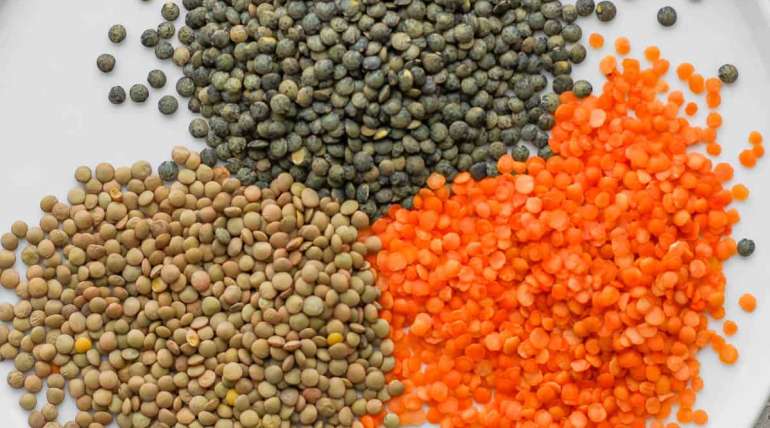
  1. Russian Green Lentils: Green lentils from Russia are known for their firm texture and slightly peppery flavor. They hold their shape well after cooking, making them perfect for salads, soups, and side dishes. They are a popular choice for Iranian households and restaurants looking for a reliable source of protein that is both delicious and versatile.
  2. Russian Red Lentils: These lentils are prized for their quick cooking time and slightly sweet flavor. Russian red lentils are ideal for making traditional Iranian dishes such as “Adasi” (a lentil-based soup) and “Khoresht” (a type of stew). Their vibrant color and creamy texture make them a favorite for chefs and home cooks alike.
  3. Russian Brown Lentils: Known for their earthy flavor, Russian brown lentils are perfect for hearty stews, soups, and casseroles. They are a great option for dishes that require lentils to retain their shape and absorb flavors from spices and herbs. Their robust texture and rich flavor make them a staple in many traditional and modern recipes.

Freshly Harvested Lentils: A Commitment to Quality

One of the key factors that set us apart is our commitment to providing new, freshly harvested lentils from the same season. This ensures that every batch is not only fresh but also packed with the highest nutritional value. Unlike lentils that have been stored for extended periods, our products retain their natural flavor, texture, and color, making them a preferred choice for consumers who demand quality.

Why Choose Us for Importing Lentils from Russia to Iran?

  1. Quality Assurance: We take pride in delivering only the finest Russian lentils to the Iranian market. Each shipment is carefully inspected to meet international standards and ensure that our customers receive top-quality products.
  2. Competitive Pricing: By sourcing directly from trusted farmers and suppliers in Russia, we can offer highly competitive prices on all types of lentils, including Russian green lentils, Russian red lentils, and Russian brown lentils. This makes it more affordable for wholesalers, retailers, and individual customers in Iran to access premium lentils without compromising on quality.
  3. Reliable Supply Chain: We have established a robust supply chain network that allows us to handle large orders efficiently and deliver them on time. Our logistics team is experienced in managing all aspects of the import process, from sourcing and packaging to transportation and customs clearance.
  4. Customer Support and Easy Communication: We value our customers and strive to provide excellent support at every stage of the purchasing process. For inquiries or to place an order, we offer multiple contact options, including WhatsApp and email. Our team is always ready to assist you with any questions you may have about our products, pricing, or delivery schedules.

Contact Us Today

If you are looking to import high-quality lentils from Russia to Iran, we are here to meet your needs. With a variety of options, including Russian green lentils, Russian red lentils, and Russian brown lentils, we guarantee fresh, nutritious, and affordable products for every customer.

To learn more about our products or to place an order, please reach out to us via WhatsApp or email. Our team will be happy to assist you and ensure a smooth and satisfying experience.

Conclusion

In conclusion, importing lentils from Russia to Iran is a smart choice for anyone looking to source high-quality lentils at competitive prices. With a focus on fresh harvests, diverse product offerings, and excellent customer service, we are your trusted partner for all your lentil needs. Contact us today to get started and enjoy the best that Russian lentils have to offer!

Feel free to reach out to us through WhatsApp or email for further details, pricing, or to place an order. Your satisfaction is our priority, and we look forward to serving you.

En savoir plus

Lentil Seeds from Russia: GREENRUSNK’s Unyielding Commitment to Agrarian Excellence

Lentils: A Global Dietary Staple Lentils, with their rich history and nutritional profile, have firmly cemented themselves as a staple in diets around the world. From hearty soups in Europe to aromatic dals in Asia, the lentil’s versatility knows no bounds. And when discussing the finest sources of these nutrient-packed legumes, Russia, with its expansive fertile lands, emerges as a leader. Within Russia’s agricultural framework, there’s one name that resonates with trust, quality, and commitment: GREENRUSNK.

Russia’s Lentil Legacy While Russia may not be the first name that springs to mind when one thinks of lentils, it’s a mistake to overlook this agrarian powerhouse. The nation’s diverse climatic zones, coupled with its vast expanses of fertile soil, provide the ideal conditions for cultivating lentils that are rich in flavor, texture, and nutritional value.

Why GREENRUSNK is the Pinnacle for Lentil Seed Imports:

  1. Stringent Quality Assurance: At RUSNK, quality isn’t just a word—it’s a pledge. Every batch of lentils undergoes a thorough quality assessment, ensuring that what reaches the consumer is nothing but the best.
  2. Direct Farmer Partnerships: RUSNK’s collaboration with over 250,000 dedicated Russian farmers provides a clear advantage. These partnerships guarantee a regular supply of high-caliber lentils, grown with generations of expertise and passion.
  3. Sustainable Farming Ethos: The global consumer today is not just concerned about quality but also the origin and sustainability of their food. RUSNK’s commitment to eco-conscious farming ensures that the lentils are produced with minimal environmental impact.
  4. Advanced Processing & Packaging: Beyond cultivation, the processing and packaging of lentils play a crucial role in preserving their freshness and nutritional value. RUSNK’s state-of-the-art facilities ensure that the lentils maintain their integrity from the farm to the table.
  5. Market Customization: Different markets have distinct preferences in terms of lentil varieties, sizes, and textures. Catering to this, RUSNK offers tailored solutions to meet the specific demands of diverse markets.
  6. Reliable Logistics & Distribution: RUSNK’s formidable logistics network promises punctual deliveries. The company’s reputation for reliability ensures that your lentil shipments reach you as promised, every time.
  7. Value Proposition: RUSNK’s operations are designed for efficiency, and this translates to competitive pricing. The company offers premium lentils without the premium price tag, providing unparalleled value.

Voices from the Global Market Across continents, the chorus of satisfied customers stands as a testament to RUSNK’s dedication to excellence. Importers, wholesalers, and consumers consistently praise the unmatched quality and flavor profile of RUSNK’s lentils.

In the vast domain of global agriculture, choosing the right partner for lentil import is paramount. With RUSNK, you’re not merely selecting a supplier; you’re aligning with a legacy—a tradition that has, for years, showcased the best of Russian agriculture. For those seeking the finest lentils, the path invariably leads to RUSNK.

En savoir plus

RUSNK Company: Pioneering Global Agriculture with Russian Excellence

In the sprawling tapestry of the global agricultural landscape, certain names stand out, not just for their scale but for their commitment to quality, innovation, and tradition. One such name, etched with golden letters, is RUSNK—a beacon of Russian agrarian excellence and a global ambassador of the nation’s rich farming heritage.

Rooted in Russia’s Soil Russia, with its vast tracts of fertile land, diverse climatic zones, and an agrarian history that dates back millennia, is a natural powerhouse in the world of agriculture. Embedded in this context, RUSNK isn’t just a company—it’s an embodiment of Russian agriculture’s spirit. Born from the soil of this great nation, RUSNK has grown, not just in scale but in its depth of understanding and appreciation of what agriculture means.

A Network Beyond Compare At the heart of RUSNK’s operations is its impressive partnership network, encompassing over 250,000 dedicated farmers. This network, spread from the frosty tundras of Siberia to the sun-kissed fields of the south, ensures a consistent, top-tier quality of products. Each farmer, with tales of traditions passed down through generations, adds a unique touch to the collective RUSNK offering.

Achievements That Speak Volumes RUSNK’s journey is punctuated with numerous milestones, but one stands out prominently: the successful completion of over 760,000 agricultural projects. These aren’t mere numbers; they narrate stories of innovation, resilience, and a commitment to elevate global agricultural standards. From sustainable farming initiatives to large-scale crop optimizations, these projects have left an indelible mark on the international farming community.

Quality as a Trademark RUSNK’s reputation is built upon an unwavering commitment to quality. Whether it’s grains, wheats, lentils, or sunflower seeds, every product that bears the RUSNK stamp undergoes rigorous quality checks, ensuring they meet global standards while retaining the authentic touch of Russian farming traditions.

The Customer Echo “WHAT OUR CUSTOMERS ARE TALKING ABOUT” isn’t just a section on a webpage; it’s a testament to RUSNK’s global impact. From the bustling markets of Asia to the gourmet kitchens of Europe, testimonials pour in, lauding the unmatched quality and the essence of Russia captured in every product.

A Future Forward Vision While deeply rooted in tradition, RUSNK is not one to rest on its laurels. With a forward-looking vision, the company continuously invests in research, innovation, and sustainable farming techniques. The goal? To ensure that as the world’s agricultural needs evolve, RUSNK remains at the forefront, leading with example and excellence.


The Pillars of RUSNK’s Success

Embracing Diversity Russia’s vast geographical expanse offers a myriad of microclimates, each with its unique agricultural strengths. RUSNK harnesses this diversity to its advantage. From the barley-rich fields of the Urals to the vegetable gardens of the Volga, the company’s reach embraces the entire agrarian spectrum of Russia. This wide-ranging portfolio ensures that RUSNK doesn’t just offer a product but an array of agricultural riches that cater to global palettes and needs.

Sustainable Farming: A Commitment, Not a Choice As global conversations shift towards sustainable and environmentally-friendly practices, RUSNK stands ahead of the curve. The company’s ethos is rooted in responsible farming. This means not just maximizing output, but doing so in a way that respects the land, conserves resources, and ensures that the soil remains fertile for generations to come. By integrating modern technology with age-old practices, RUSNK has managed to strike a balance, producing bountiful harvests without straining Mother Earth.

Investing in the Future: Research & Development Behind the scenes of every bag of grain or seed that RUSNK delivers, there’s a robust R&D wing at work. Collaborating with international agricultural institutes and local research centers, RUSNK is constantly on the lookout for innovative farming techniques, crop optimization strategies, and sustainable practices. This investment in research not only ensures a superior product but paves the way for the future of farming.

Empowering the Agrarian Community For RUSNK, the relationship with farmers goes beyond mere partnerships. It’s a bond, nurtured by mutual respect and a shared vision. The company’s initiatives to uplift the farming community—be it through training programs, financial assistance, or technology transfers—ensure that while RUSNK grows, it lifts its entire community with it.

Global Reach with a Local Touch RUSNK’s operations span the globe, catering to diverse markets with varying demands. However, irrespective of where RUSNK marks its presence, the company ensures a localized touch. Understanding local preferences, adhering to regional quality standards, and building community relations form the essence of RUSNK’s global strategy.

Adapting to a Changing World In a rapidly changing global landscape—marked by climate change, shifting dietary preferences, and evolving market dynamics—RUSNK remains agile. Their adaptability, backed by research and a deep understanding of global trends, ensures they not only weather the storms but often stay ahead, setting trends rather than following them.

En savoir plus
  • 1
  • 2